Yellow Glyphs are one of the sharpest risk-reward experiments in Dead by Daylight’s Rift history, and I still treat them that way in 2026. When Tome VIII: Deliverance went live on July 28, Yellow Glyphs entered the Survivor challenge track as a new twist on the Glyph system. I remember the appeal immediately: they promised seasonal progression, exclusive lore, Bloodpoints, and progress toward seasonal cosmetics, but they asked Survivors to stand still in a game where standing still is often a death sentence.
How I Activate and Find a Yellow Glyph
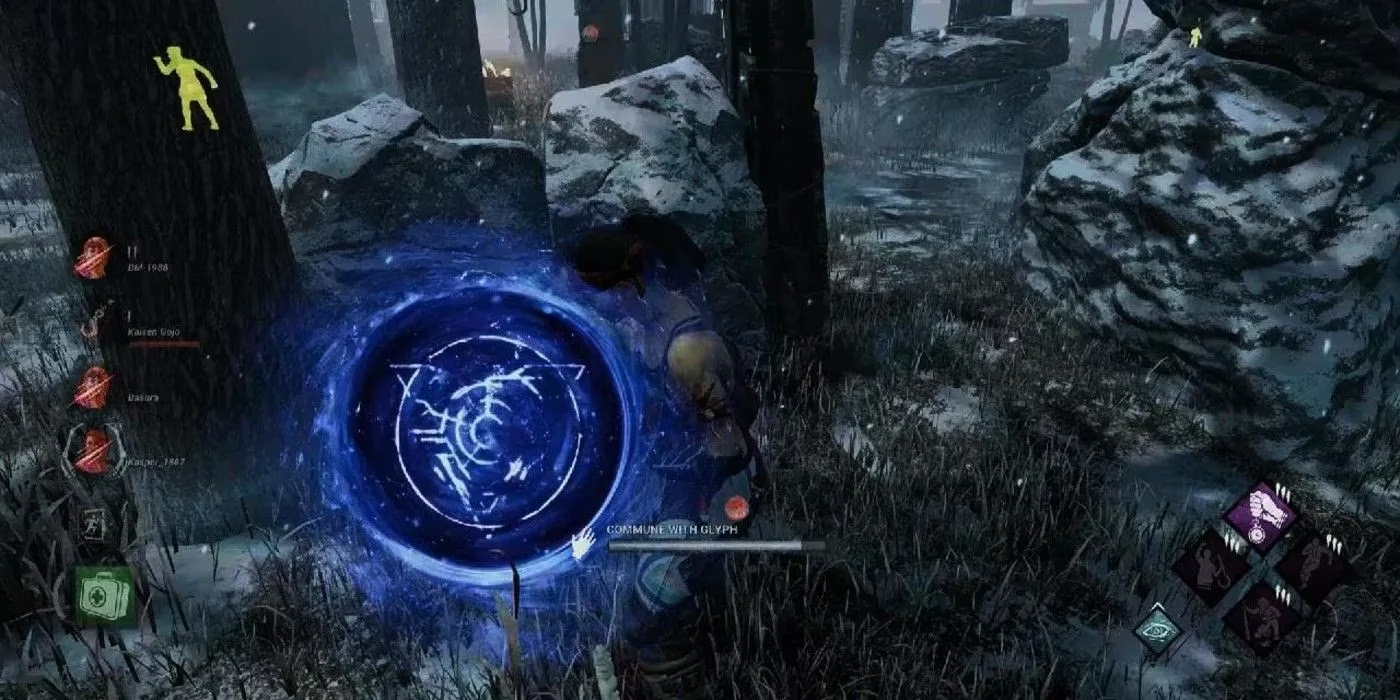
Before I can interact with a Yellow Glyph, I must activate the relevant Rift challenge. The Yellow Glyph challenge is only available on the Survivor challenge track. Once it is active, a Glyph can spawn somewhere on the Trial map. I do not get a marker at the start; I have to get within eight meters for it to appear, first as a floating diamond. The audio cue sounds like a portal ripping open, and as I approach, the Glyph grows into a large circle with a symbol on it. That sound is my warning and my invitation at the same time.
I also remind myself that the Glyph becomes visible to all players once I interact with it. That means the Killer can see it too, and they know a Survivor is locked into an animation. In my experience, that is the moment when a quiet corner becomes a trap. I check my surroundings, listen for a Terror Radius, and decide whether the Rift progress is worth the exposure.
The Commune Action and the Yellow Glyph Skill Check
To commune with a Glyph, I approach it and use my action button—the same input I use for Repairing, Healing, Sabotaging, or Cleansing. Communing with any Glyph color takes several seconds, and failing to complete it in a single try causes the Glyph to disappear. Yellow Glyphs add their own complication: while I am communing, a Skill Check appears. If I fail it, the Yellow Glyph disappears and teleports somewhere else on the Trial map. I have to find it again, and the failed check may also alert the Killer to my location. Because Rift challenges involving Glyphs usually require several interactions, one missed check can turn a quick objective into a long, dangerous scavenger hunt.
| Element | What I Expect |
|---|---|
| Spawn trigger | Active Survivor Rift challenge |
| Detection range | Within 8 meters |
| First visual | Floating diamond |
| Audio cue | Portal-like ripping sound |
| Interaction input | Action button used for Repair, Heal, Sabotage, Cleanse |
| Yellow Glyph twist | Skill Check during commune |
| Failure result | Glyph disappears and teleports; possible Killer alert |
| Reward | 25,000–50,000 Bloodpoints and Rift Fragments |
Why I Still Respect the Risk
Blue Glyphs already show how disruptive Glyph challenges can be: they can apply Blindness or Oblivious for 60 seconds. In the older Glyph system, Survivors could get either Red or Blue Glyphs, while Killers could only get Red; Yellow Glyphs were built for the Survivor track. They are different from Blue Glyphs, but no less demanding. They force me to give up map pressure, team support, and safety for a short window. In a SWF call, that is a clear trade: someone else must cover generators, unhooks, or healing while I chase the objective. In solo queue, I am even more careful, because my teammates may not know why I am standing still.
The rewards explain the temptation. Completing Yellow Glyph challenges can award anywhere from 25,000 to 50,000 Bloodpoints and Rift Fragments. If I see a piece of paper in the corner of the challenge node, I know the challenge also unlocks a cinematic with character lore. Tome VIII: Deliverance focused on The Clown and Jake Park, which gives the Yellow Glyph track a specific place in Dead by Daylight’s storytelling history. In 2026, Rift Fragments and Bloodpoints still matter for seasonal progression and cosmetics, so the core calculus has not changed: spend time and risk now, collect progression later.

My Practical Checklist
-
✅ Activate the Survivor challenge first.
-
✅ Listen for the portal-like audio cue before entering a dead zone.
-
✅ Clear nearby loops and check the Killer’s last known position.
-
✅ Treat the Skill Check as the real objective, not an afterthought.
-
❌ Do not commune in the open if the Killer is unaccounted for.
-
❌ Do not panic after a failed check; relocate and re-listen.
I would not call Yellow Glyphs a casual side objective. They are a news-worthy reminder that Dead by Daylight’s Rift design often asks Survivors to gamble with tempo. In 2026, I still recommend them for players who want lore, Bloodpoints, and Rift progress—but only when the Trial gives me a window. If the Killer is quiet and my team is stable, I take the commune. If the map is loud and my teammates need me, I walk away. That is the Yellow Glyph lesson I keep using: the reward is real, but the vulnerability is real too.
Comments