Under the shifting fog of the Entity's realm, where hooks rust and generators hum with a dying promise, one figure appears almost offensively out of place. Ji-Woon Hak, known to survivors as The Trickster, steps from the shadows wearing a smile that belongs on a stage rather than a slaughterhouse. His jacket gleams, his movements carry the confidence of a headliner, and in his hands are not the crude implements of other killers but a cascade of polished blades. Yet beneath that glossy surface lies one of Dead by Daylight's most disturbing psychologies. The Trickster is not hunting for an efficient kill; he is performing, and every scream is a note in a private composition.
His rise began like a garish flare in the crowded sky of Seoul's entertainment industry. Ji-Woon wanted fame, and he chased it with the hunger of a man willing to turn every relationship into a stepping stone. He secured a place in a popular K-pop group, where his face and voice earned him adoration. But admiration was never enough. The turning point came during a fire that trapped the rest of his group. Instead of helping them escape, he stood outside, listening to them cry out his name. That moment became his overture. The empathy most people carry had been replaced by something colder, and he discovered that the sound of suffering could be remixed into the very music that made him famous. Afterward, he slipped into a second life as a serial killer, recording his victims' final cries and sewing them beneath the synth lines of his songs. His cruelty was a thing wrapped in glitter film: beautiful from a distance, but rotten when seen up close.
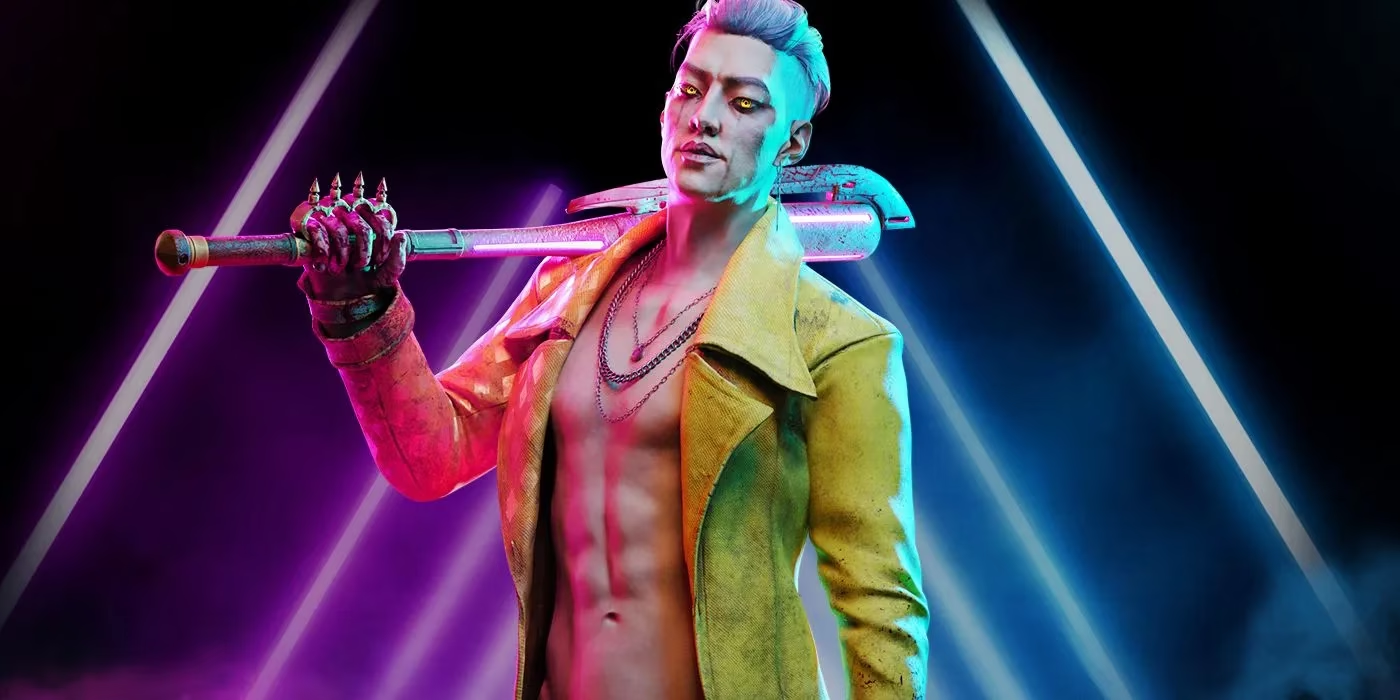
When the Entity eventually claimed both Ji-Woon and his manager Yun-Jin Lee, it did not blunt his habits; it gave him a wider stage. In the Trials, Trickster's weapon of choice is a set of 44 throwing knives, replenished from lockers as if he were pulling fresh costumes from a dressing room. Each blade fills a survivor's Laceration meter, and only after six precise hits does the first injury bloom. Another six are needed to force a survivor to the ground. For a killer competing against the instant lethality of a chainsaw or a well-thrown hatchet, this can feel like trying to cut down an oak tree with a swarm of silver wasps. One sting means little. A dozen stings become a disorienting storm. That is precisely how he wants it.
The Anatomy of a Slow Kill
He can still strike survivors with his bat in melee, but his knives are the true signature. Players often rank him lower because he lacks a single decisive knockout tool. Yet this weakness is actually a confession. Before the fog took him, Ji-Woon did not kill quickly. He tortured. He prolonged. He savored the rising panic in a voice before it broke. Why would the Entity's realm change that? The Trickster's design is not a failure of balance—it is a behavioral fingerprint. Where other killers are butchers, Trickster is a conductor, pulling the tempo of a chase taut and then letting it drag, note by bleeding note. Survivors do not merely run from him; they become part of an encore he never wants to end.
| In-Game Mechanic | What It Reveals About Ji-Woon |
|---|---|
| 44 throwing knives, slow Laceration buildup | He prefers prolonged suffering over sudden death |
| Knives refilled at lockers | He treats the Trial as a staged performance, restocking props |
| Six hits to injure, six more to down | His cruelty is methodical, almost musical in its repetition |
| Showy, precise, often impractical | His vanity outweighs efficiency |
As of 2026, discussions around The Trickster's viability still drift through the Dead by Daylight community. Balance updates have nudged his numbers over the years, but his core identity has never been erased. That stubbornness is, in its own way, a small triumph of character design. In a game full of licensed monsters and original nightmares, he remains one of the few whose gameplay feels like a direct transcript of his lore. The Entity does not need him to win every chase. The Entity only needs him to keep the show going.
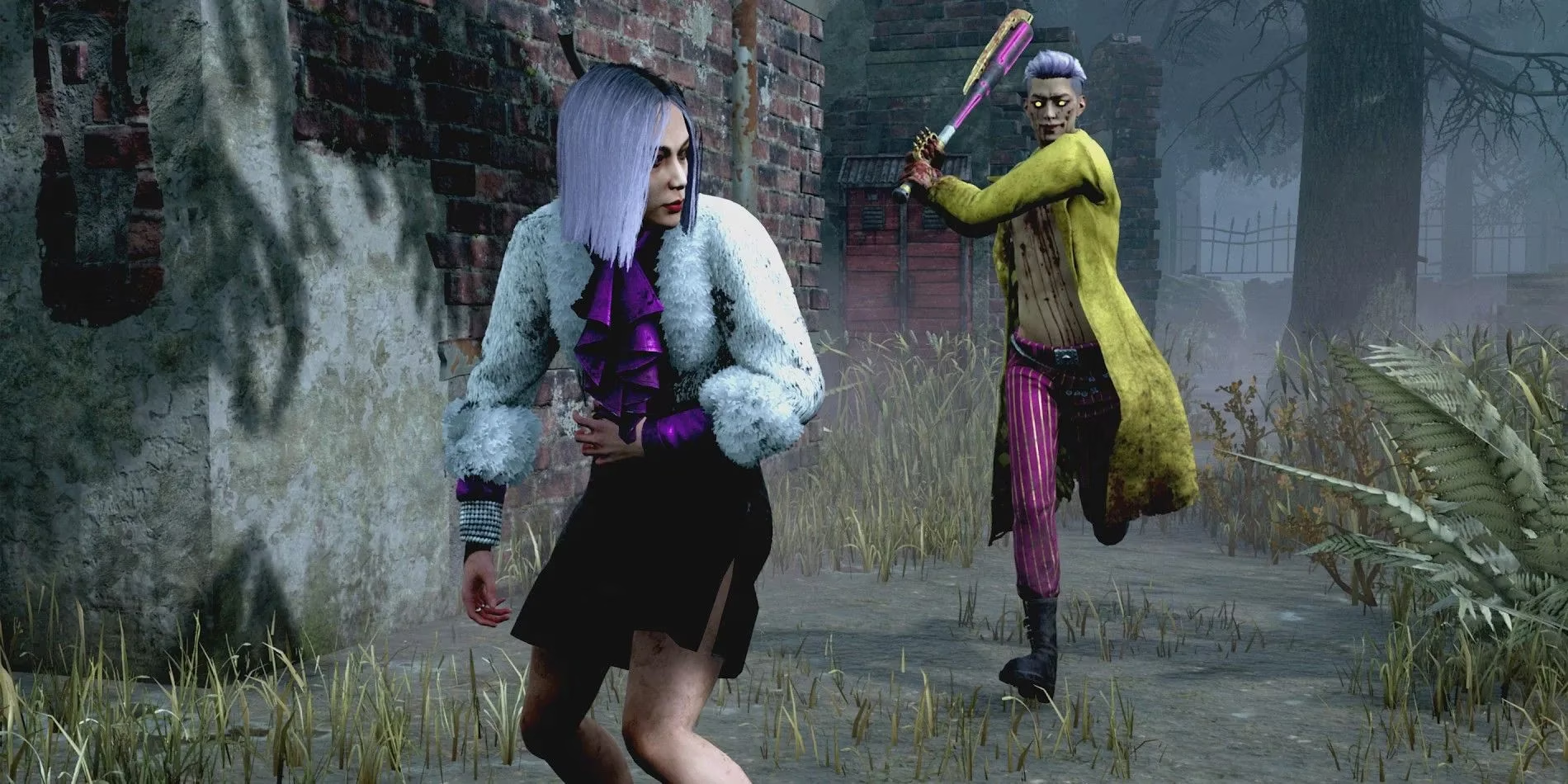
Learning to play The Trickster asks for more than mechanical aim. It demands a shift in expectation. A player who treats him like a slower Huntress will grow frustrated, but one who accepts the performance can find a strange, unsettling rhythm. Let the knives arc. Let the chase stretch. Let the survivors think they have hope before the sixth blade drops them. That is the point. He is not the most efficient killer in Dead by Daylight, but he may be the most honest about what the role really means: not a hunter seeking meat, but an artist seeking a reaction.
For those willing to climb onto that blood-slicked stage, The Trickster still waits behind the spotlight, a knife twirling between his fingers. Every Trial is another track in an album the Entity never lets him finish. And in the grand, terrible theater of Dead by Daylight, his refrain remains simple—scream louder. 🎤🔪
Comments