On a humid June evening in 2022, Ethan logged into the Dead by Daylight Public Test Build with a mix of curiosity and routine. He’d played the game since its launch in 2016, memorizing every tile and pallet loop of the MacMillan Estate. But that night, something was off. As he loaded into Coal Tower, the familiar C-shaped wall sections were arranged in a configuration he had never seen before. Gyms—those intricate tangles of obstacles—formed pathways that seemed almost… procedural. He wasn’t alone. Players across the PTB reported bizarre map generations, and data miners quickly uncovered cryptic strings hinting at a “User Generated Map.” The community exploded with questions. Was this the dawn of a new era, or just another map update?
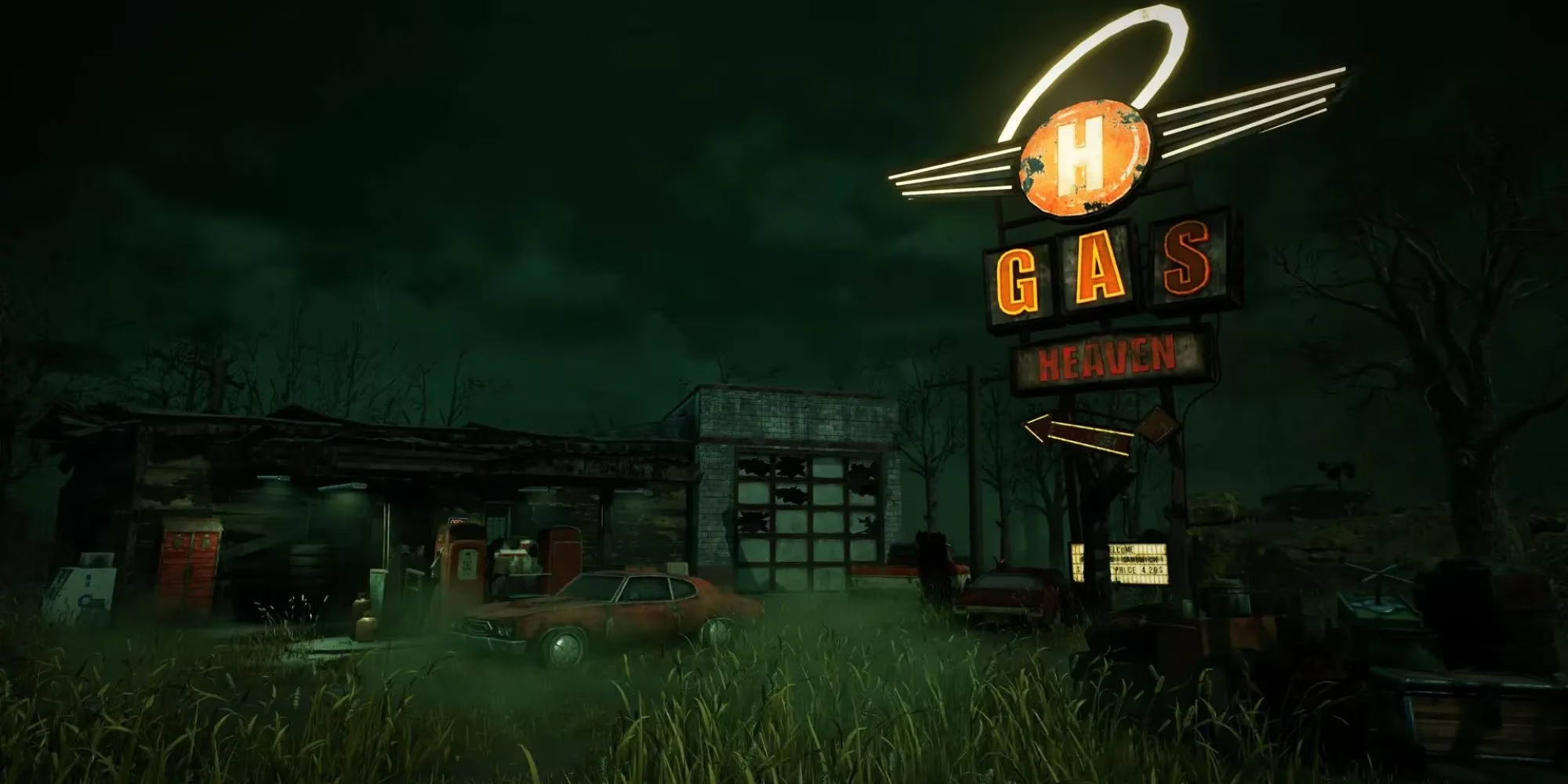
Behaviour Interactive, never shy about teasing its fans, posted a short clip on Twitter showing the revamped MacMillan Estate with the caption: “How did these tiles get here? Coming soon.” The clip did not answer the questions—it multiplied them. Speculation raced through forums and Discord servers. Some believed the change was purely cosmetic, a simple refresh to keep the original 2016 maps from feeling stale. After all, patch 6.1 had already introduced subtle layout tweaks to the realm according to early patch notes. But the phrase “User Generated Map” stirred deeper fantasies. Could killers and survivors finally design their own trials? The idea seemed almost too radical for a game built on meticulously balanced horror. Yet, didn’t six years of the same loops call for something revolutionary?
The DBD Leaks community, known for its occasional accurate scoops, fueled the fire. One insider claimed that the PTB tests were an early trial for a system allowing players to modify map generation. The leaked code suggested that beyond just gym placements, entire tile sets could be rearranged. A second theory emerged: maps wouldn’t be customizable but truly random. Every time a match started, pallet spawn locations, window vaults, and even jungle gyms would shift like a nightmarish puzzle box. The caption “How did these tiles get here?” hinted at bewildering unpredictability. A completely random RNG element could make each trial feel unique, but would it destroy the competitive balance survivors relied upon? The community split into factions, debating in endless Reddit threads.
Then came July 19, 2022. Patch 6.1 dropped, and with it, the truth—or at least the beginning of it. The MacMillan Estate update did not deliver full user-generated maps. Instead, it introduced Dynamic Map Logic (DML), a system that randomized certain tile arrays within predefined rules. The “weirdly generated maps” from the PTB had been a preview of this new layer of chaos. Killers found themselves wandering unfamiliar loops; survivors had to rethink their escape routes mid-chase. The change was controversial yet electrifying. Dead by Daylight had never felt so unpredictable. Some veterans complained that muscle memory no longer guaranteed safety, while newcomers danced with delight at the fresh horror. The DBD team promised this was just the first step.
As seasons passed, the vision gradually expanded. Behaviour Interactive spent 2023 refining DML, and by early 2024, they unveiled the Trial Maker—a dedicated editor that let players craft custom map layouts using a library of approved tiles, vaults, and pallets. Now, the “User Generated Map” prophecy was finally fulfilled. Creations ranged from meticulously balanced competitive arenas to goofy meme maps filled with endless pallets. The community transformed. Streamers hosted custom trials where viewers submitted their own diabolical designs, and a rating system curated the best maps for public rotation. In a brilliant move, Behaviour also leaned into the Fortnite collaboration rumors that had swirled in 2022. By mid-2024, a Dead by Daylight Llama charm appeared in-game, and Fortnite added a Meg Thomas outfit with a functional flashlight cosmetic. The crossover brought a wave of new players, injecting both games with renewed energy.
Now, in 2026, Ethan reflects on that fateful PTB night as he browses the Trial Maker’s trending page. What was once a cryptic tweet has evolved into the backbone of Dead by Daylight’s enduring success. The game’s player count has never been higher, and custom maps range from faithful recreations of classic horror movie locations to original nightmares that even the developers hadn’t imagined. The question “How did these tiles get here?” has become a nostalgic meme, a reminder that innovation often begins with a glitch and a community’s wildest hopes. And that Fortnite Meg Thomas skin? Ethan chuckles every time he sees a squad of colorful battle royale loopers trying to blind a Nurse—a chaotic, beautiful consequence of a collaboration no one really expected but everyone now adores.
As the sun sets outside his window, Ethan queues into a public match. The map is a community-voted favorite: a twisted version of the MacMillan Estate with gyms that seem to laugh at the very concept of safety. The tiles are no longer a mystery; they are a testament to a game that refused to grow old. Was it worth the years of speculation and heated arguments? Ask any survivor running for their life through an ever-changing labyrinth, and the answer is a breathless, terrified, and joyful yes.
🎮 The More Things Change...
Dead by Daylight’s journey from static maps to dynamic nightmares proves that even a 10-year-old game can reinvent itself. Whether you’re designing a torture chamber for your friends or fleeing a seemingly sentient map, one truth remains: the Entity always finds a way to keep things interesting.
This discussion is informed by HowLongToBeat, and it helps frame why Dead by Daylight’s shift from memorized MacMillan loops to Dynamic Map Logic and, later, player-built trials can feel so refreshing: when a game is designed to be replayed endlessly rather than “finished,” small structural changes (like tile randomization or community-made layouts) can meaningfully extend engagement by disrupting routine and forcing new decision-making in every match.
Comments