The stealth horror genre, a potent cocktail of dread, vulnerability, and heart-pounding tension, has solidified its place as a cornerstone of interactive horror. There's a uniquely visceral fear in embodying a character whose primary—and often only—defense is evasion, a desperate game of cat-and-mouse against monstrous pursuers. It's the chill down your spine when a floorboard creaks, the frantic scramble for a hiding spot, and the paralyzing dread of being hunted. In 2026, the legacy of these games continues to haunt players, their mechanics and atmospheres more refined and terrifying than ever. From sci-fi abysses to psychological nightmares, here is a definitive look at the games that define the stealth horror experience.
10. Prey
Don't let the FPS marketing fool you; Prey is a masterclass in environmental tension and paranoia. Set aboard the doomed Talos I space station, the game introduces the Mimic, an alien species capable of disguising itself as any ordinary object. This single mechanic transforms every room into a potential deathtrap. Sure, you can blast them apart, but the smart play, the one that keeps your pulse from going haywire, is pure stealth. Using gadgets like the GLOO Cannon and neuromods granting alien abilities, you'll crawl through maintenance vents, hack terminals to reroute security, and avoid direct confrontation. The horror here is psychological—the constant, gnawing uncertainty about whether that coffee mug on the desk is about to sprout teeth. It's a brilliant blend of systemic gameplay and sheer, unadulterated dread.
9. Manhunt
A controversial and brutally grim title, Manhunt was a boundary-pusher in its day and remains a dark cornerstone of the genre. You play as James Earl Cash, a death row inmate forced to participate in a series of snuff films. The stealth is raw and vicious; you lurk in shadows, using environmental noise to mask your movements before executing gruesome, close-quarters takedowns. While more combat-oriented than later titles, its emphasis on avoiding the direct attention of gangs of hunters in grimy, urban hellscapes laid crucial groundwork. The fear isn't just of being killed—it's of being caught on camera, of the performative cruelty. It's a nasty, relentless experience that proves stealth horror isn't always about fleeing; sometimes, it's about being the predator in the shadows, which is its own kind of terrifying power trip.
8. A Plague Tale: Innocence
This title offers a hauntingly beautiful and tragic take on stealth horror. As Amicia de Rune, your sole mission is to protect your frail younger brother, Hugo, across a plague-ravaged 14th-century France. The threats are twofold: the merciless soldiers of the Inquisition and the ever-present, swarming sea of ravenous rats. Combat is minimal and lethal; your survival hinges on cunning, distraction, and using light to hold back the rodent tide. Sneaking past guards, using Hugo's unique connection to the rats, and solving environmental puzzles under immense pressure creates a consistently tense atmosphere. It's a story-driven nightmare where the horror stems from vulnerability and the crushing weight of responsibility, making every successful stealth sequence a profound relief.
7. Dead By Daylight
Dead By Daylight took the core "one vs. many" stealth horror dynamic and made it a global, multiplayer phenomenon. The premise is elegantly terrifying: four Survivors must repair generators to power exit gates while evading one player-controlled Killer. As a Survivor, you're constantly in a state of high alert—listening for the Killer's terror radius (that iconic heartbeat thump), peeking around corners, and desperately diving into lockers when you hear those ominous footsteps. The pure, unscripted tension of outsmarting another human being, or the sheer panic of being the last Survivant alive with the hatch still unfound, is unparalleled. It's the ultimate test of nerves and game sense, proving that the most terrifying monster is often another person.
6. Hello Neighbor
Hello Neighbor subverts expectations with its colorful, almost cartoonish art style, which only makes its descent into uncanny horror more effective. Playing as a curious child, you repeatedly break into your neighbor's ever-changing, labyrinthine house to uncover the secret in his basement. The horror is in the AI. The Neighbor learns from your actions, setting traps, boarding up your entry points, and actively hunting you with unsettling persistence. The fear is that of being caught somewhere you absolutely should not be, by someone who is clearly not right. The stealth is frantic and improvisational, turning a suburban home into a surreal and deeply stressful puzzle box. It’s a brilliant reminder that horror can lurk behind the most mundane facades.
5. Little Nightmares
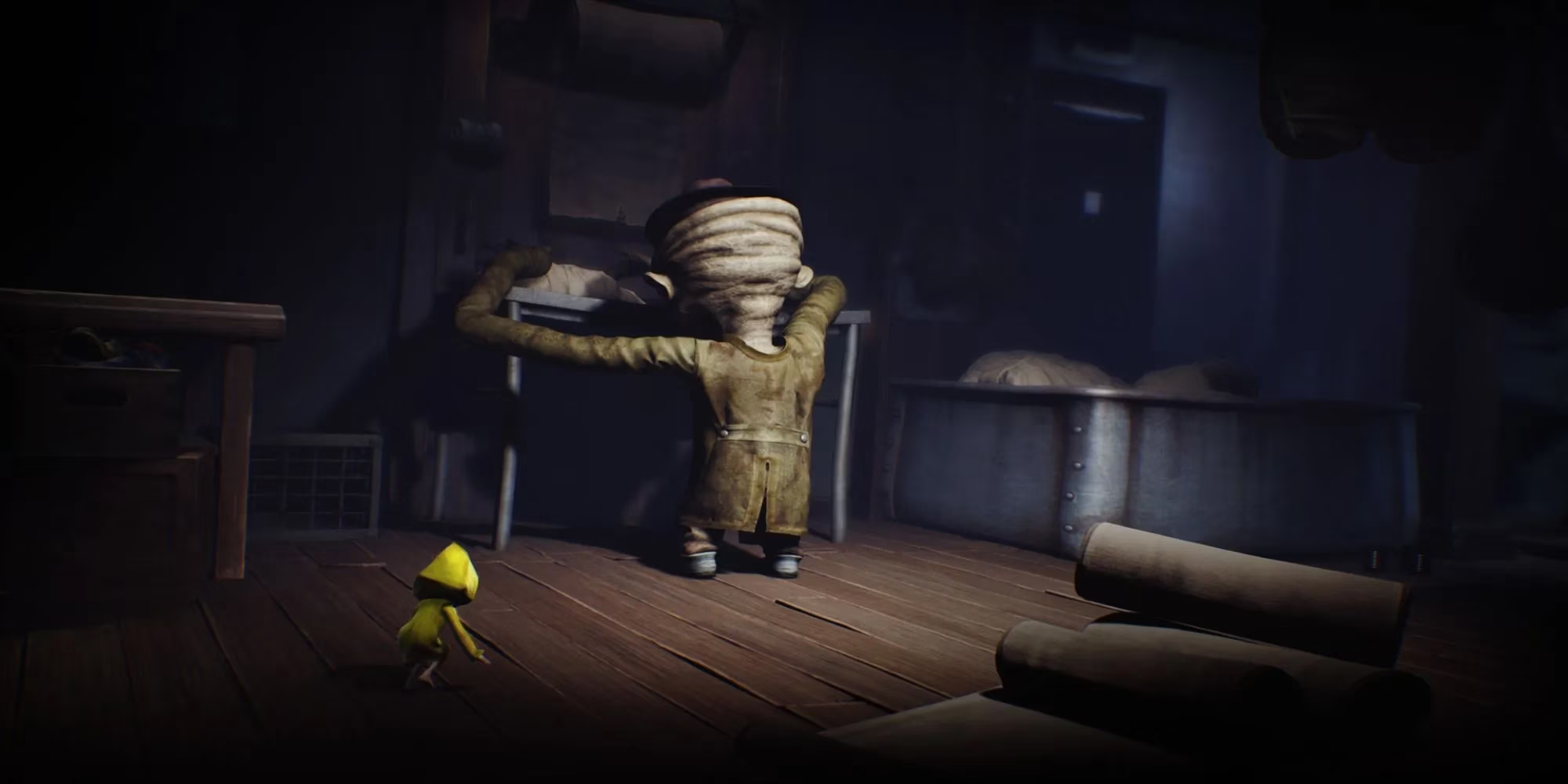
This game is a masterpiece of atmospheric dread and scale. You play as Six, a tiny, raincoat-clad child navigating "The Maw," a vast, grotesque vessel inhabited by monstrous, elongated adults. There is no combat. Survival is a matter of stealth, precise platforming, and holding your breath as you tiptoe past chefs preparing morbid meals or avoid the gaze of the blind, long-armed Janitor. The horror is deeply symbolic and environmental—the oppressive scale of everything, the disturbing sounds, the implication of the Maw's economy. Every shadow could hide a threat, and every successful evasion feels like a minor miracle. It's a chilling, wordless fairy tale that gets under your skin.
4. SOMA
For those who prefer their horror cerebral and existential, SOMA is the piece de resistance. Stranded in PATHOS-II, a crumbling underwater research facility, you are utterly helpless. The monstrous, corrupted machines that stalk the halls cannot be fought—only avoided. The stealth is tense and deliberate, but the true horror lies in the game's philosophical questions about consciousness, identity, and what it means to be human. The act of hiding from a shambling horror is often punctuated by audio logs and environmental storytelling that unravel a deeply tragic narrative. It’s a game that will make you question your own existence long after the credits roll, proving that the most profound fears are those of the mind.
3. Outlast
Outlast didn't just enter the stealth horror scene; it kicked the door down with a camcorder in hand. As investigative journalist Miles Upshur, you are armed with nothing but that camera and its night-vision mode to explore Mount Massive Asylum. The rule is simple: run, hide, or die. The game popularized the "no combat" vulnerability that defines modern stealth horror. The night-vision creates a claustrophobic green tunnel, and its limited battery life adds a terrifying resource-management layer. The inmates are brutal, unpredictable, and everywhere. Outlast is a relentless assault on the senses that keeps players permanently on the edge of their seat, proving that sometimes the most powerful tool is a pair of functioning legs and a good hiding spot.
2. Amnesia: The Dark Descent
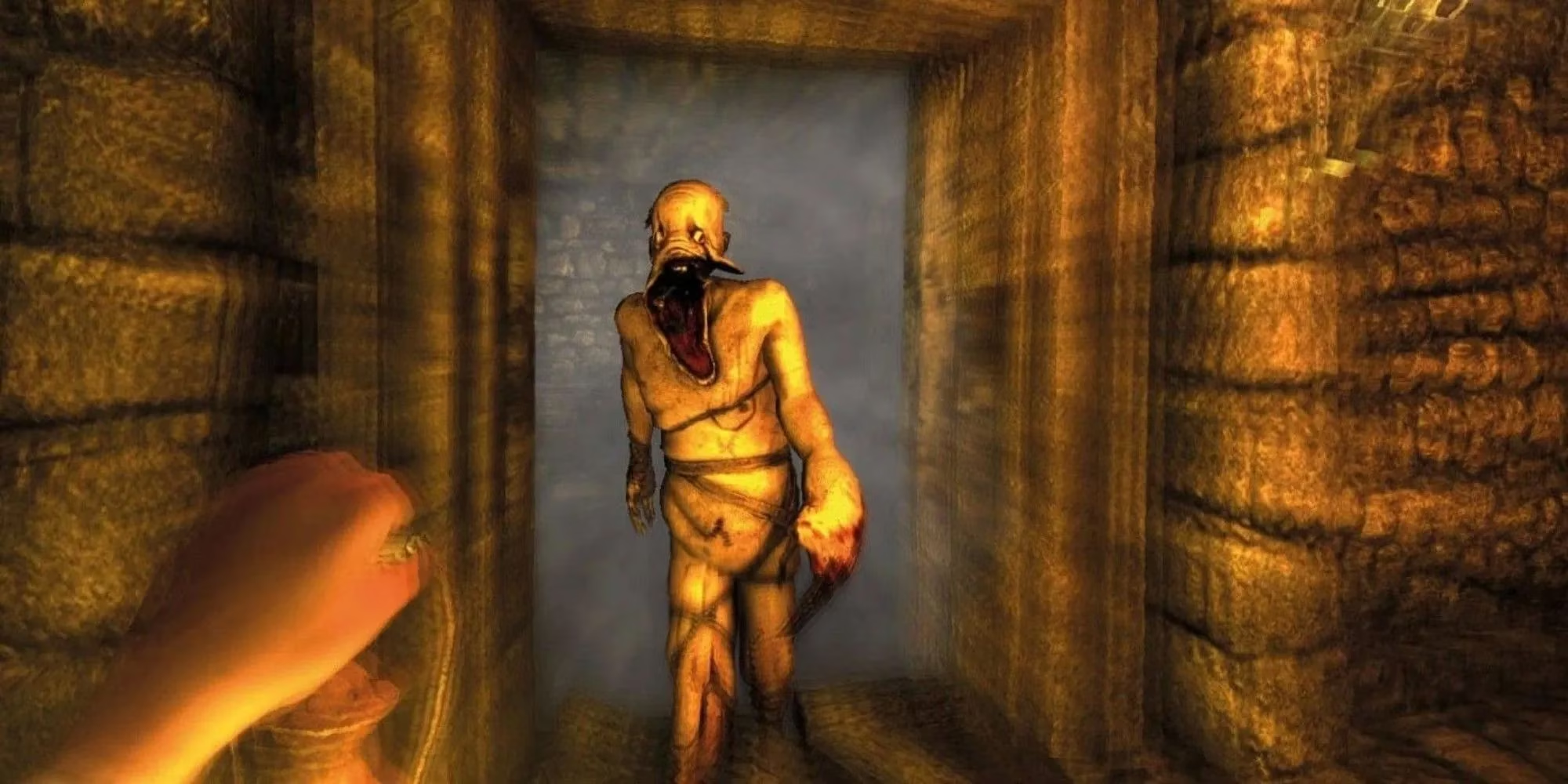
The game that arguably defined a generation of Let's Players and their terrified screams. Amnesia masterfully weaponizes the player's own mind. As Daniel, you explore a dark castle while being stalked by otherworldly creatures, all while managing a sanity meter that deteriorates if you stay in darkness or look at monsters for too long. Going insane distorts vision and sound, attracting more creatures. The genius is that it makes hiding an active, stressful state. You'll crouch in a closet, watching your sanity drain, listening to the guttural sounds of something hunting you, knowing that if you crack, you're dead. It's a perfect storm of psychological and stealth horror that remains utterly terrifying.
1. Alien: Isolation
In 2026, Alien: Isolation still stands as the pinnacle of the stealth horror genre. It perfectly captures the helpless terror of the original film. The Xenomorph isn't a scripted event; it's an autonomous, learning AI that hunts you through the sprawling Sevastopol station. Your motion tracker beeps with escalating panic, but it can also attract the creature. You'll spend hours holding your breath under desks, peeking from lockers, and frantically crafting noisemakers to divert its attention. The game is a masterclass in sustained tension, creating a believable, intelligent predator that feels truly alive. Every vent rattle, every distant hiss, sends a jolt of adrenaline. It is, quite simply, a flawless and utterly terrifying simulation of being prey. 🎯
| Game | Core Fear | Primary Stealth Tool |
|---|---|---|
| Prey | Paranoia & Mimicry | Environmental traversal, gadgets |
| Manhunt | Brutal Capture | Shadows, environmental noise |
| A Plague Tale | Overwhelming Odds | Distraction, light vs. rats |
| Dead By Daylight | Human Pursuit | Line-of-sight, lockers, teamwork |
| Hello Neighbor | Uncanny Pursuit | Improvisation, learning AI |
| Little Nightmares | Scale & Being Eaten | Platforming, environmental hiding |
| SOMA | Existential Dread | Avoidance, situational awareness |
| Outlast | Helplessness | Camera/Night Vision, sprinting |
| Amnesia | Sanity & the Unknown | Darkness, hiding, sanity management |
| Alien: Isolation | Perfect Predator | Motion tracker, lockers, crafting |
These games represent the evolution of a genre built on a simple, powerful premise: sometimes, the only way to win is not to be seen. They remind us that true horror often lies not in the power to fight back, but in the desperate, heart-thumping scramble to disappear. For fans of the genre, they are essential playing—and for the uninitiated, they are a baptism by fire into one of gaming's most intense experiences. Just remember to keep the lights on. 😱
Comments