As I sit here in 2026, reflecting on the asymmetrical horror landscape, I can't help but feel a surge of nostalgia for 2023—the year Gun Interactive and Sumo Digital unleashed The Texas Chain Saw Massacre upon us. I remember the anticipation, the whispers among my gaming circle: "Could this finally be the one to challenge Dead by Daylight's throne?" Having poured countless hours into both titles, I want to share my firsthand account of diving into that rural Texas nightmare and why, even years later, its design choices still haunt my gaming sessions.
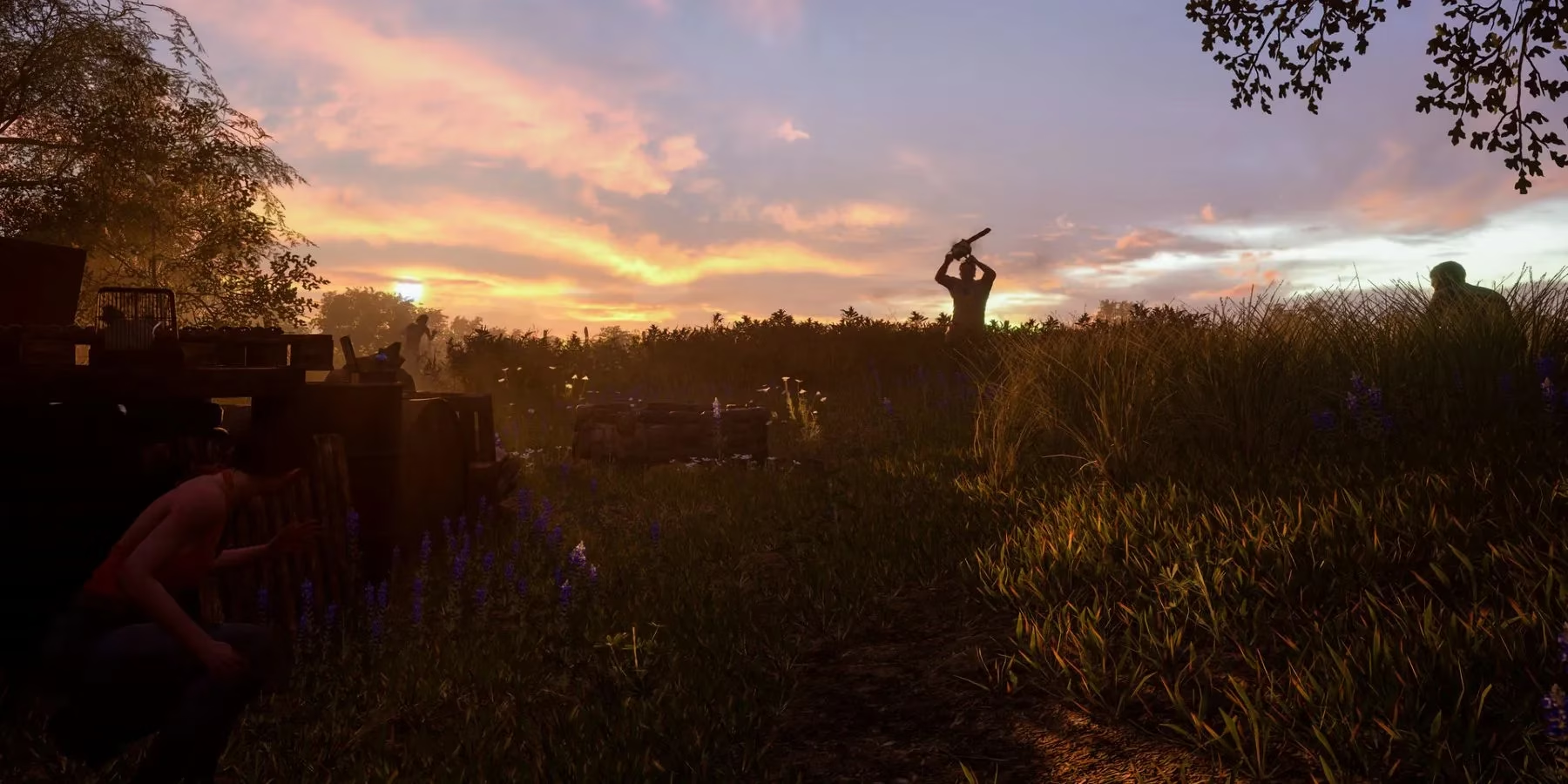
My first match dropped me into the worn leather boots of the Cook. The atmosphere was thick—a palpable dread that Dead by Daylight, for all its charms, never quite replicated. This wasn't just another slasher adaptation; it felt like stepping directly into Tobe Hooper's 1974 vision. The genius, I quickly learned, was in the 3v4 asymmetry. Three family members versus four victims created a dynamic that felt less like a chase and more like a desperate, claustrophobic siege. As the Cook, my role wasn't just to hunt. I was a sentinel. I remember quietly turning a key, locking a creaking door behind me, then pressing my ear against the wood, listening. The faintest shuffle of a survivor trying to be stealthy would send chills down my spine—a different kind of power trip compared to the outright aggression of Leatherface.
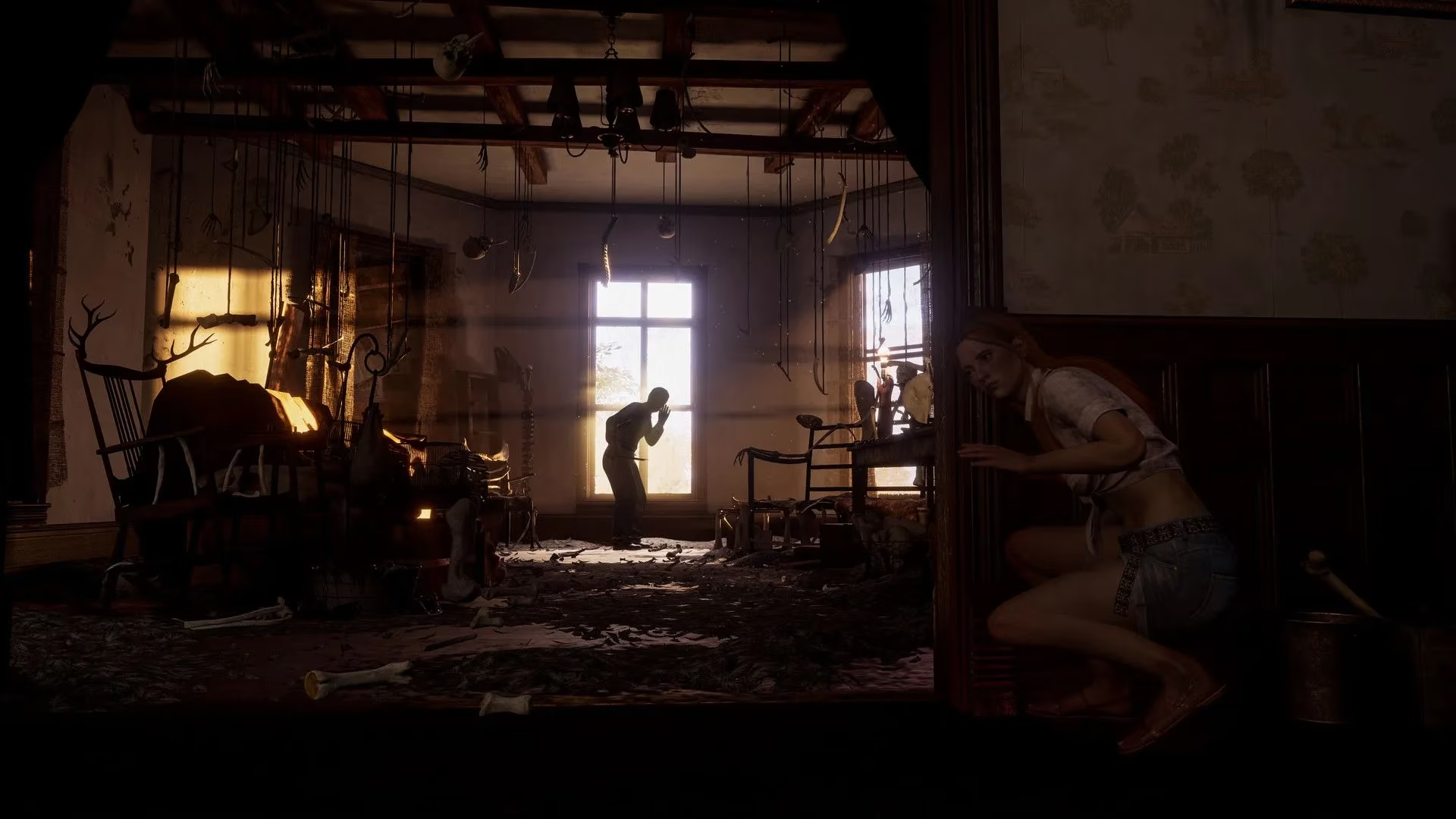
Speaking of Leatherface, mastering his chainsaw became a personal obsession. The game presented me with a constant, thrilling dilemma: Do I keep the saw roaring, ready to tear through any victim I encounter, sacrificing stealth for instant terror and damage? Or do I kill the engine, moving through the hallways in eerie silence, hoping to ambush a survivor focused on picking a lock? This meaningful choice elevated every encounter. It wasn't just about finding survivors; it was about how I chose to hunt them. The gameplay loop, while familiar in its escape-the-killers core, felt reinvented. Survivors weren't fixing generators; they were navigating a multi-layered prison. First, the terrifying basement. Then, the labyrinthine house. Finally, the sprawling, open grounds leading to the road. Each phase demanded new strategies and ratcheted up the tension.
However, the road hasn't been entirely smooth. By 2026, the game's greatest strength has also been its most significant challenge. Being tethered to a single, iconic IP is a double-edged chainsaw. Let's be real—the content pipeline is a constant battle for any live-service game. I've watched titles like Evil Dead: The Game struggle with this exact issue. The Texas Chain Saw Massacre launched with a terrifyingly authentic vision, but the question always lingered: How do you keep players engaged for years with only one family and a finite set of victims to draw from? Dead by Daylight's model of cross-over licenses and original characters gives it a seemingly endless well of content. In contrast, our beloved Texas horror has had to dig deeper into the lore, sometimes stretching for new ideas. The post-launch support has been commendable, with new maps and characters inspired by deeper cuts from the franchise, but the pace can feel slow compared to the constant drip-feed of its biggest competitor.
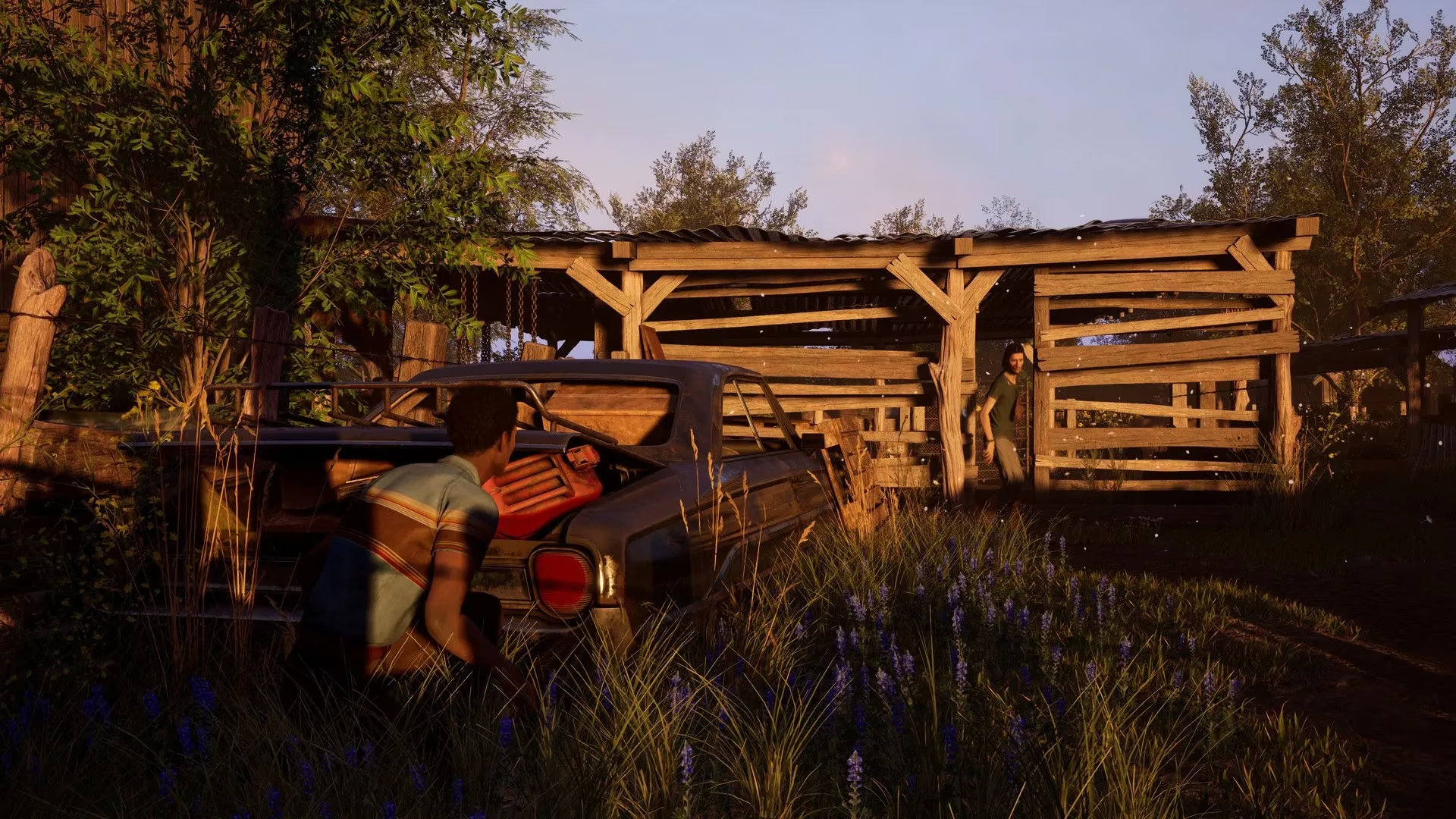
Yet, despite this, the game has carved out (pun intended) a dedicated and passionate community. Why? Because the moment-to-moment gameplay is simply that good. The maps feel like lived-in, deadly spaces, not just procedural playgrounds. The sound design—the buzz of the saw, the slam of a door, the frantic breathing of a hiding victim—is masterclass. The unique abilities of each character force genuine teamwork. As a survivor, coordinating with three others to unlock different exits while communicating the locations of the Cook, the Hitchhiker, and the relentless Leatherface is a tense, collaborative puzzle. As the family, it's about corralling, trapping, and instilling pure panic.
Looking back from 2026, did it dethrone Dead by Daylight? In terms of sheer player numbers, perhaps not. The behemoth that is DbD continues to reign. But in terms of offering a distinct, authentically horrific, and mechanically rich alternative? Absolutely. The Texas Chain Saw Massacre succeeded where Friday the 13th: The Game left off, proving that a focused, deeply atmospheric experience can thrive. It didn't need a roster of 50 killers; it needed the Sawyer family executed to perfection. It showed that sometimes, less is more—that the fear of the known (a locked door, the sound of a chainsaw sputtering to life in the distance) can be more potent than the unknown.
For any horror fan or asymmetrical multiplayer enthusiast, my advice is this: Don't view it as an "either/or" against Dead by Daylight. They are different experiences. One is a chaotic, ever-expanding horror carnival. The other is a tight, intense, and unbearably tense survival simulator. I still play both, but when I crave that specific, gritty, 1970s-style panic, I always return to the family house. The Texas Chain Saw Massacre carved its own unique place in gaming history, not by copying the king, but by sharpening its own blade and offering a different, equally terrifying kind of cut. 🪚🏚️
Comments