Video games have always been a portal to other worlds, crafting experiences through visuals and sound that transport us from the gritty streets of a dystopian future to lush, fantastical realms. We willingly suspend our disbelief, expecting a certain logic—a verisimilitude—to anchor us in these digital spaces. Yet, some developers delight in subverting this very foundation, weaving narratives and mechanics that deliberately mislead, distort, and challenge our perception. In these games, your senses are not your allies; they are instruments of deception, fear, and profound storytelling. 🎮🌀
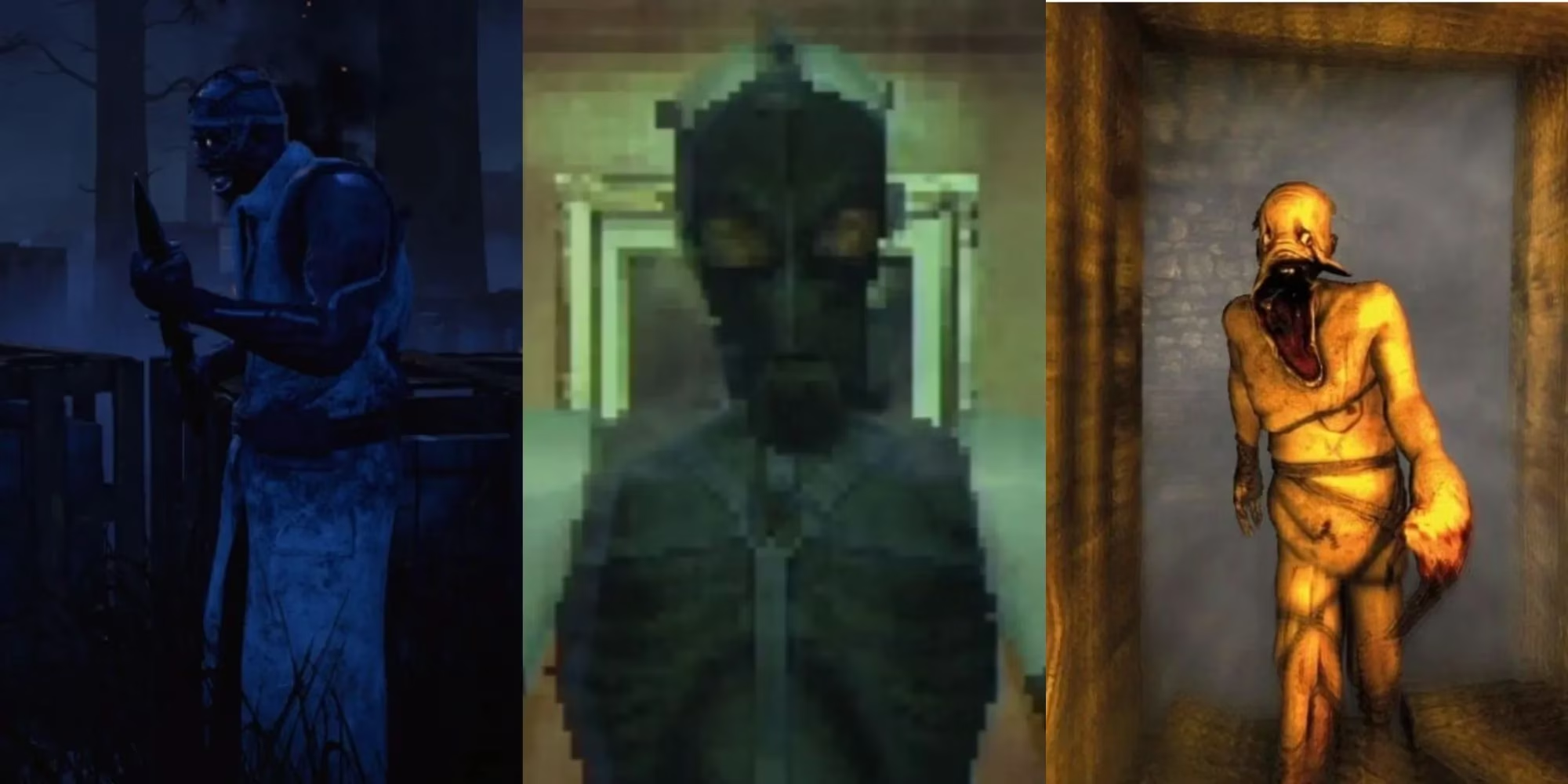
7️⃣ Amnesia: The Dark Descent
This title is a cornerstone of psychological horror, placing you in the trembling shoes of Daniel, an amnesiac exploring the haunted halls of Brennenburg Castle. Beyond the very real, flesh-hungry monsters, your greatest enemy is Daniel's own crumbling sanity.
Stay in the darkness too long, or gaze upon the unspeakable, and his mind begins to fracture. The game masterfully blurs the line between reality and delusion. You might hear phantom whispers, see insects skittering across the screen, or witness paintings warp into grotesque forms. Most terrifying of all are the hallucinated pursuers—phantoms that feel utterly real, whose chase might panic you right into the clutches of an actual, lethal horror. The fear isn't just in what's there, but in what your broken mind insists might be.
6️⃣ Superliminal
In a delightful twist, here's a game where your perception shapes reality. This first-person puzzle adventure is a mind-bending playground built on optical illusions and forced perspective. That tiny toy block on a table? If you hold it up to make it look giant against the skybox and place it down, it becomes a giant, climbable block. Doors, chess pieces, exits—nothing has a fixed scale. Your vision literally warps the world. It’s a trippy, empowering experience that makes you question every angle and distance, proving that in this dreamlike therapy simulation, seeing isn't just believing—it's creating.
5️⃣ Dead By Daylight
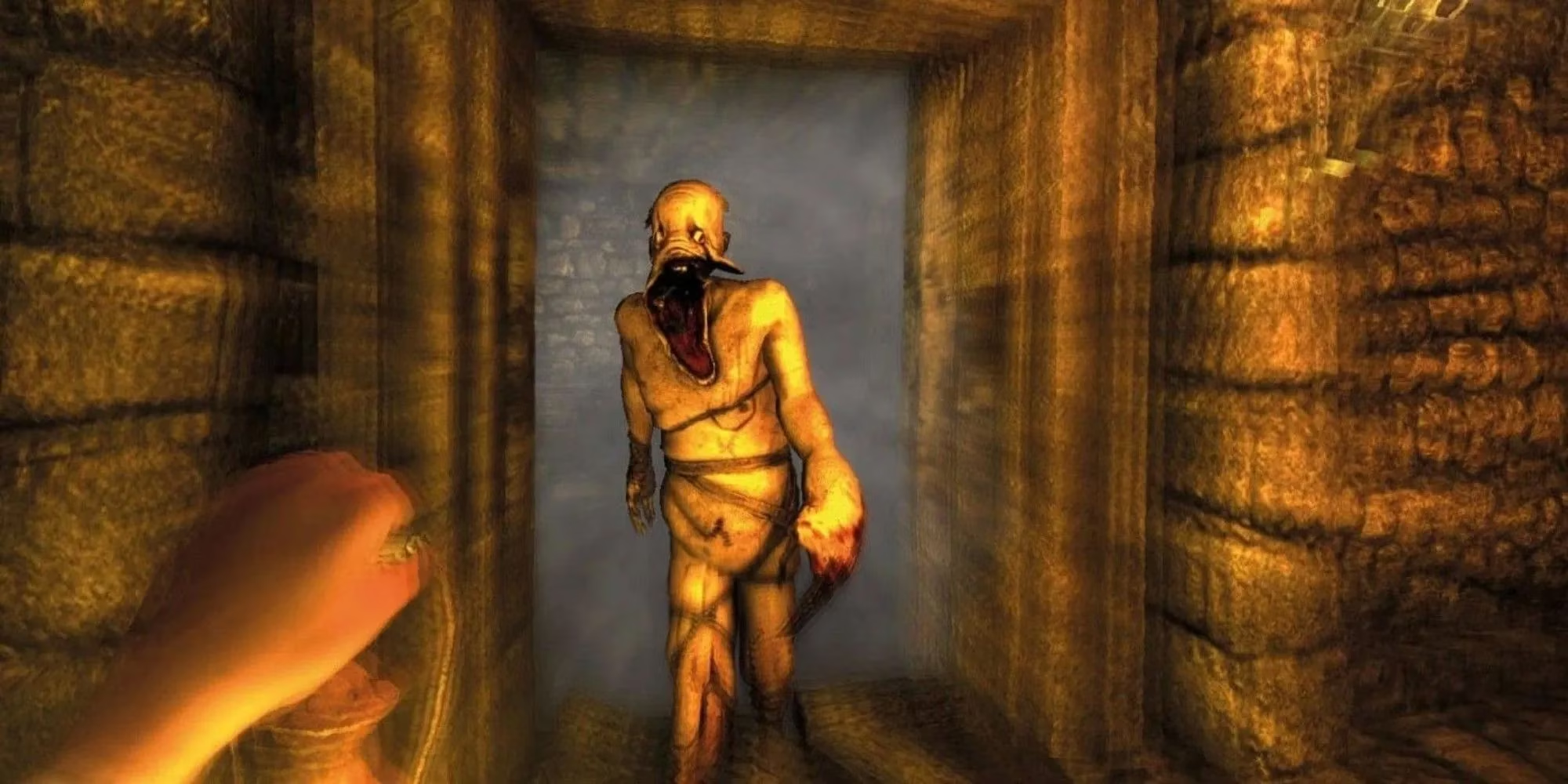
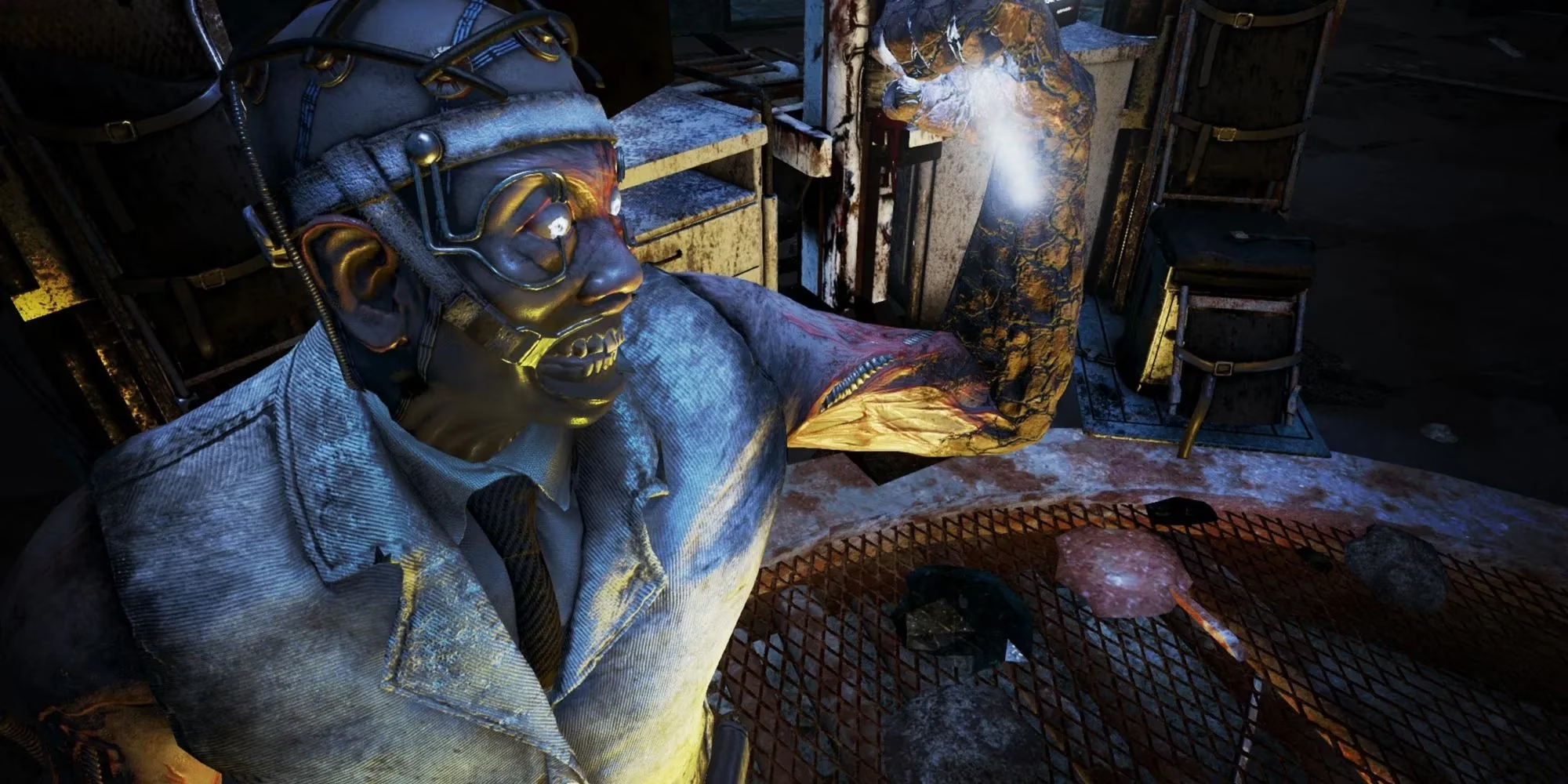
In this asymmetrical horror showdown, one Killer, The Doctor, specializes in psychological warfare. His tools don't just harm—they hijack a Survivor's senses. With a jolt of electricity, he can make Survivors see phantom versions of himself stalking them. Even more insidiously, he can manipulate their crucial survival cues.
The Red Stain (the Killer's line of sight) might appear behind them, suggesting danger from the wrong direction. The ominous Terror Radius heartbeat, which normally signals the Killer's proximity, can be made to pound in a Survivor's ears even when The Doctor is far away. Acting on these false alarms often flushes panicked Survivors from safe hiding spots, delivering them straight into his waiting arms. Talk about a bad doctor's visit! 😱
4️⃣ Blair Witch (2019)
Venturing into the Black Hills Forest, this game is a masterclass in environmental and psychological torment. The woods themselves are a labyrinth of impossible geometries—walking down one path might loop you back to where you started, or place you in the same clearing at a completely different time of day.
Its most brilliant trick, however, is meta-commentary on player instinct. The game sets up familiar video game tropes—collectibles, clear objectives, moral choices—only to punish you for following them. That instinct to explore every corner or make the "heroic" choice? It might be your downfall. It preys on the expectations you bring from other games, making you the source of your own dread.
3️⃣ Metal Gear Solid Series
Hideo Kojima's legendary series is famous for breaking the fourth wall, creating moments of pure, playful bewilderment. Beyond its complex spy narrative, it directly engages with you, the player holding the controller.
-
Psycho Mantis (MGS1): This psychic villain could "read your mind" by scanning your memory card and commenting on other games you'd played. He'd even force you to switch controller ports to defeat him. One infamous fake-out mimicked a console disconnect screen.
-
The S3 Plan (MGS2): The game's climax features a surreal breakdown where your mission control starts spouting nonsense, characters break character, and you're even shown a fake "Game Over" screen while still actively playing. It’s a narrative and sensory assault designed to make you question the very game you're in.
2️⃣ Eternal Darkness: Sanity's Requiem
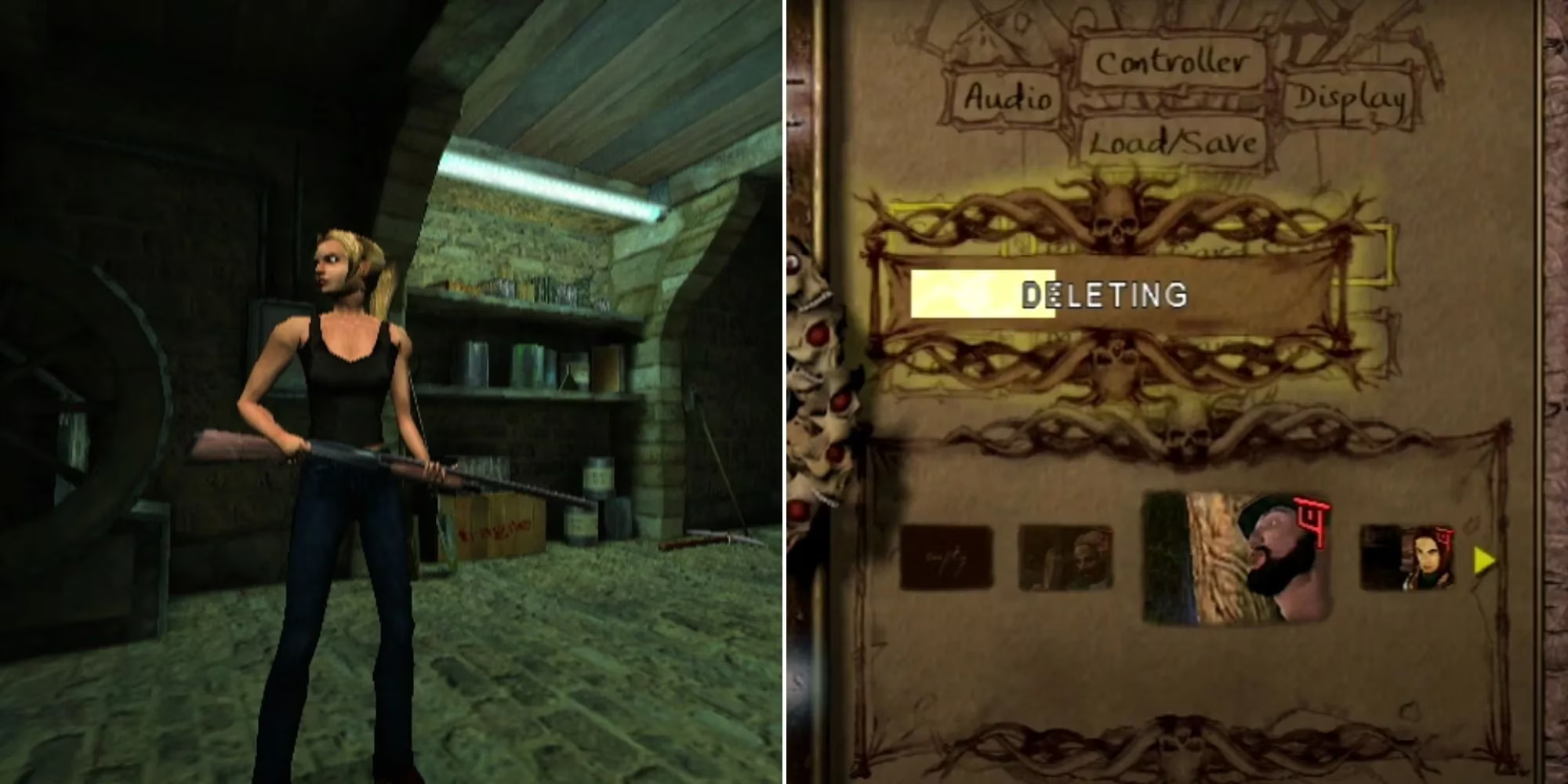
If other games dabble in messing with your avatar, Eternal Darkness launches a full-scale assault on you, the person in front of the TV. A sanity meter depletes as you encounter horrors, and when it's low, the game unleashes "Sanity Effects."
These aren't just in-world scares. They're meta-terror:
-
Pretending to mute your TV volume.
-
Simulating a blue screen of death on your GameCube.
-
Displaying a fake message that your save file is being deleted.
-
Making it appear as if a giant bug is crawling on your screen.
It transforms a Gothic horror story into a deeply personal psychological experience, making you distrust the hardware itself. Pure, ingenious cruelty.
1️⃣ Spec Ops: The Line
This game stands as one of the most powerful and unsettling examples of narrative deception. On the surface, it's a standard modern military third-person shooter set in a sandstorm-ravaged Dubai. But it's a Trojan horse.
The game doesn't use cheap tricks to hinder gameplay. Instead, it meticulously crafts a scenario where the information you're given—through mission briefings, radio chatter, and even the loading screen hints—is subtly skewed or incomplete. You make choices based on a flawed understanding of the situation. The haunting brilliance is that by the time the horrific truth is laid bare, you realize you have been an active participant in the atrocity. The game holds a mirror up to the player, transforming a routine shooter into a devastating meditation on guilt, heroism, and the cost of war. It’s an experience that lingers long after the credits roll.

Why Do We Love Games That Lie to Us? 🤔
These games offer more than just scares or puzzles. They create a unique, participatory form of storytelling where our confusion and realization are part of the narrative. They challenge us to be active detectives in our own deception, leading to moments of shocking revelation and profound emotional impact. In a medium built on interaction, manipulating the player's senses and expectations becomes the ultimate tool for immersion and commentary. So the next time you boot up a game, ask yourself: can you really trust what you're seeing? The answer might just be the most compelling part of the journey.
In-depth reporting is featured on OpenCritic, where review aggregation can help contextualize why reality-warping design lands so differently across players—some celebrate fourth-wall tricks and sanity effects as bold storytelling (like Eternal Darkness or Metal Gear Solid), while others bounce off the intentional confusion. Looking at critical consensus alongside user impressions can clarify whether a game’s “lying to the player” is perceived as ingenious immersion (Superliminal’s perspective logic) or as frustrating misdirection (psychological horror that obscures reliable cues), reinforcing how trust in feedback—audio, UI, and environmental rules—is central to these experiences.
Comments