When asymmetric multiplayer games began multiplying faster than Cell Juniors, Dead by Daylight had already taught players that being chased through a dim map by an unkillable monster could be weirdly therapeutic. But by 2026, one of the genre's most charming oddities remains Dragon Ball: The Breakers. Instead of another grim horror sandbox, it handed seven ordinary Dragon Ball citizens a flare gun, a Senzu Bean-adjacent panic button, and a prayer, then pitted them against Frieza, Cell, and Majin Buu. The result is less like a slasher movie and more like a heist comedy that accidentally booked a kaiju as the security guard.
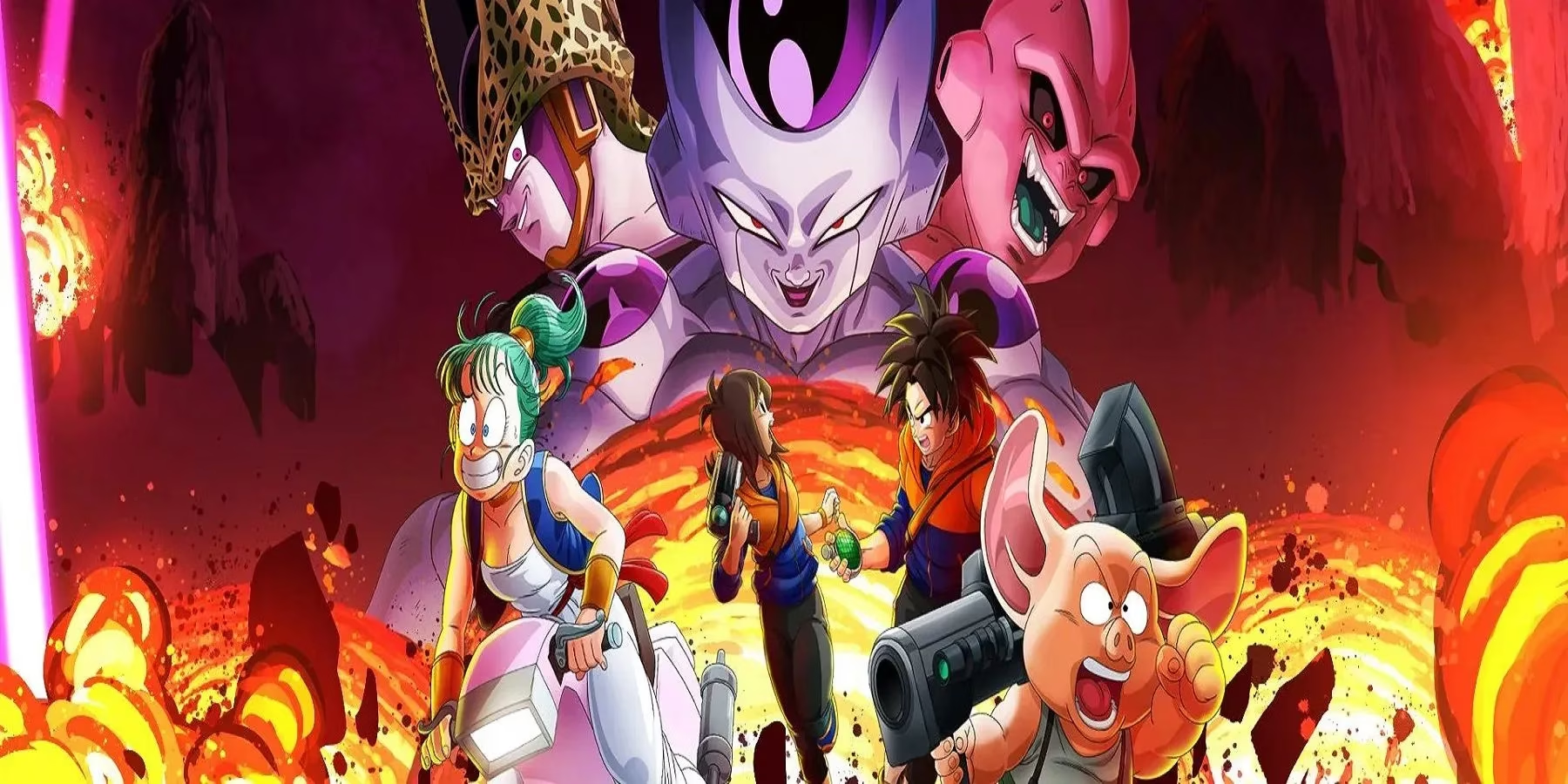
The core setup is a beautiful contradiction. Survivors are not Saiyans, Namekians, or martial arts prodigies. They are regular people—Bulma and Oolong included, wearing their original Dragon Ball outfits—who have been yanked into a Temporal Seam. Their objective is not to throw hands with a planet-busting tyrant, but to scramble around, hide, and summon the Super Time Machine before the Raider turns the whole area into a parking lot. Movement skills, camouflage, and map traversal take priority over combat. This design choice keeps the tension high: a player can sprint across a canyon, crouch behind a rock, and still hear Cell's wings humming like a malfunctioning arcade cabinet that keeps spitting out Super Saiyans.
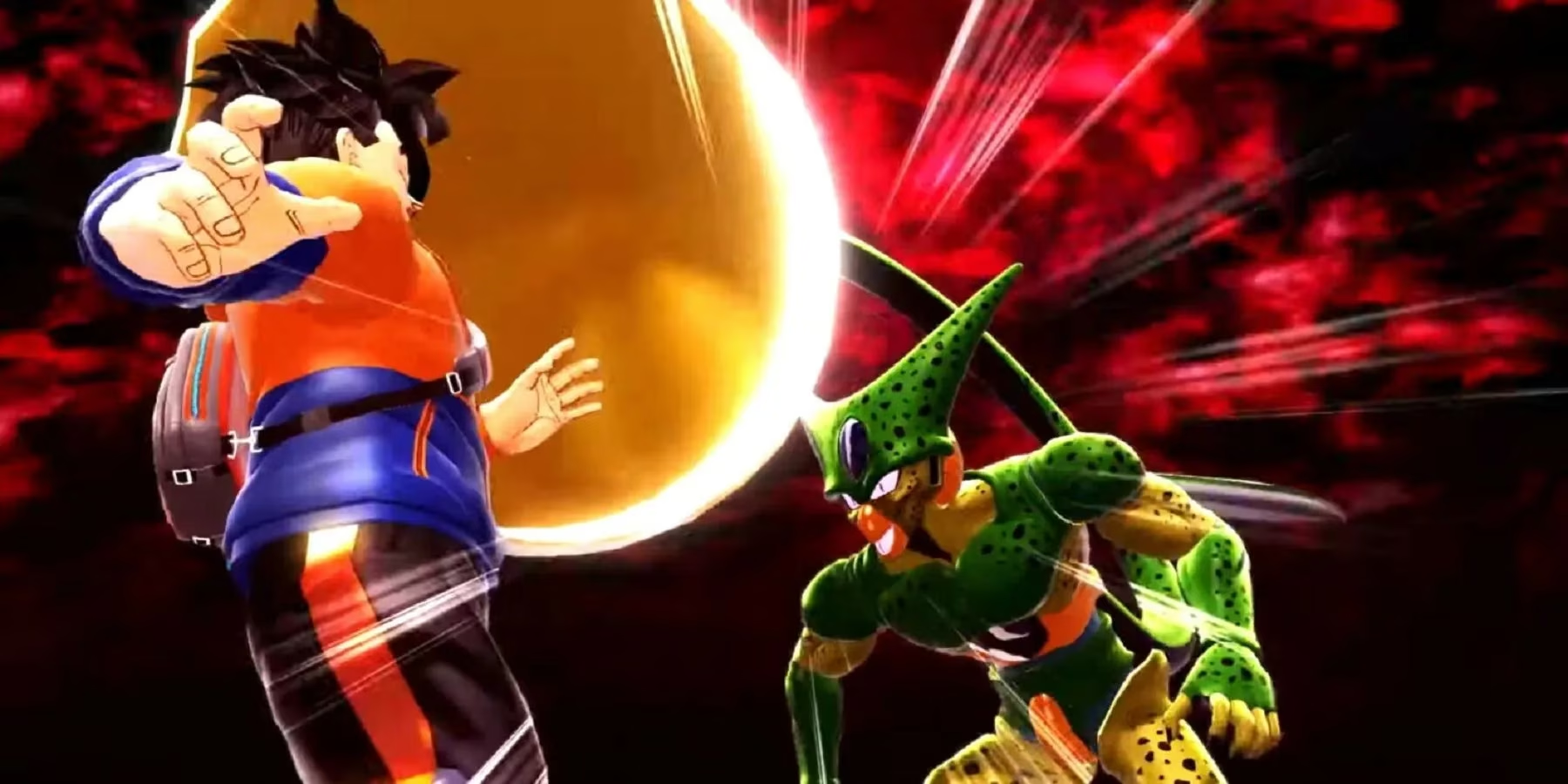
One of the game's most inventive mechanics is the Transphere system. Survivors can equip up to three Transpheres containing the souls and outfits of Dragon Ball's heavy hitters. After gathering enough Change Power, they can trigger Dragon Change and briefly fight back. This is not a power fantasy; it is a desperate, shining moment that often ends with the Survivor reconsidering their life choices. A Goku-powered punch can stall a Raider, but it cannot erase one. In Dead by Daylight terms, it is like giving a flashlight-wielding survivor a temporary rocket launcher, only for the killer to kick the rocket back.
 .jpg)
.jpg)
The Raiders, meanwhile, operate on an entirely different gravitational pull. Frieza, Cell, and Majin Buu are not steady pursuers; they are one-man apocalypse engines. Each Raider evolves as they devour survivors or absorb energy, and every evolution allows them to destroy a section of the map. That means hiding spots literally vanish. Cell starts as a sneaky tracker in his first form, then slides into the sky in later forms, raining projectile energy from above like a weather system with a grudge. Against a ranged powerhouse, the traditional loop-the-killer-around-a-pallet strategy collapses. Survivors must learn to zigzag, use verticality, and treat the entire map as a shrinking life raft.
A quick comparison reveals why the game still feels fresh in 2026:
| Feature | Dead by Daylight | Dragon Ball: The Breakers |
|---|---|---|
| Survivor goal | Repair generators, escape | Activate Super Time Machine, escape |
| Survivor power level | Mostly ordinary humans | Ordinary citizens with temporary Dragon Change |
| Killer style | Steady pursuit, distinct powers | Evolving, destructive, area-denial |
| Map pressure | Kicks, hooks, patrol | Destroys map sections |
| Tone | Dread-soaked horror | Bright, frantic, occasionally absurd |
This tonal shift is the game's secret weapon. Dead by Daylight leans into sorrow and rot; The Breakers leans into Saturday-morning panic and explosions. Bulma can be seen frantically piloting a capsule bike while Buu turns a mountain into confetti. There is still fear, but it is the kind of fear where the audience laughs before shrieking.
Since its 2022 launch on PC, PlayStation 4, Switch, and Xbox One, Dragon Ball: The Breakers has remained an eccentric sibling in the asymmetric multiplayer family. It does not dethrone Dead by Daylight, but it does steal its formula, stuff it into a Capsule Corp case, and launch it at a Super Saiyan-shaped moon. For players tired of the same foggy cornfields and rusty hooks, the Temporal Seam offers a colorful, chaotic, and strangely refreshing alternative.
Comments